
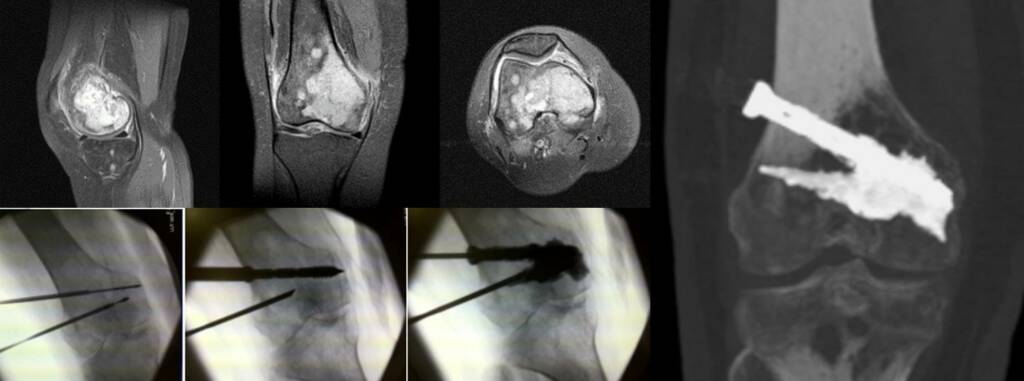
Percutaneous osteosynthesis is an advanced image-guided technique that stabilizes bone using screws, pins, or fixation systems inserted through small skin incisions.
Percutaneous osteosynthesis is an advanced image-guided technique that stabilizes bone using screws, pins, or fixation systems inserted through small skin incisions.
It is particularly useful in long bones and complex skeletal structures affected by tumors or fractures.
Impending or established pathological fractures
Bone metastases in load-bearing regions (pelvis, femur, humerus)
Mechanical instability not adequately managed with cement alone
Percutaneous osteosynthesis is often combined with:
Cementoplasty
Tumor ablation
to provide:
Structural stabilization
Pain control
This approach is crucial in patients who are not ideal surgical candidates.
Performed under conscious sedation or general anesthesia:
Image-guided percutaneous placement of fixation devices
Optional combination with cement augmentation
Hospital stay varies but is typically 24 hours..
Strong mechanical stabilization
Minimally invasive alternative to open surgery
Reduced recovery time