
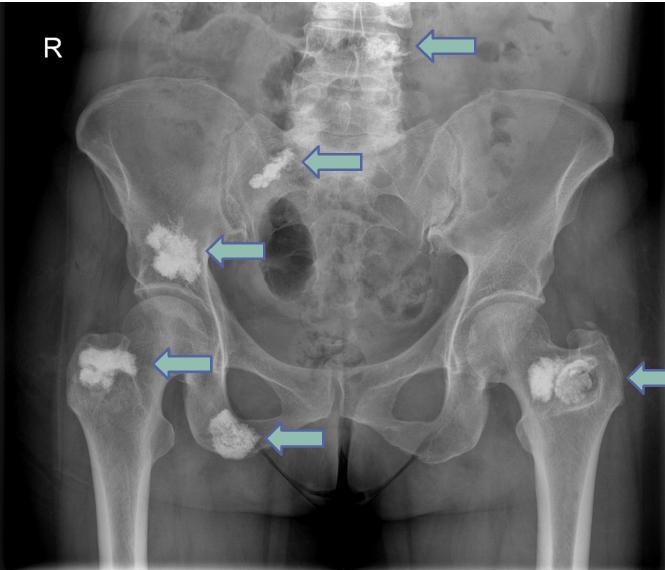
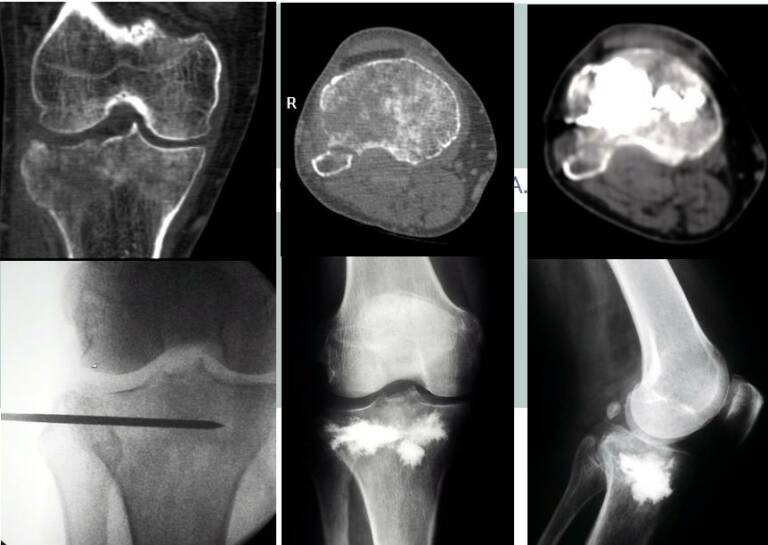
Cementoplasty is a minimally invasive procedure involving the percutaneous injection of bone cement into weakened or tumor-infiltrated bone outside the spine
Cementoplasty is a minimally invasive procedure involving the percutaneous injection of bone cement into weakened or tumor-infiltrated bone outside the spine, such as pelvis, acetabulum, femur, or humerus.
It provides mechanical stabilization and rapid pain relief, particularly in oncologic patients.
Bone metastases causing pain or structural weakness
Impending pathological fractures
Osteolytic lesions in weight-bearing bones
Cementoplasty is frequently combined with tumor ablation to:
Achieve local tumor destruction
Stabilize bone after ablation
This combined approach is essential in the management of weight-bearing bones and complex skeletal lesions.
Performed under conscious sedation or general anesthesia:
Image-guided percutaneous needle placement
Controlled cement injection within the lesion
Hospitalization is usually short (often 24 hours).
Immediate pain relief
Mechanical stabilization
Minimally invasive