
Kyphoplasty
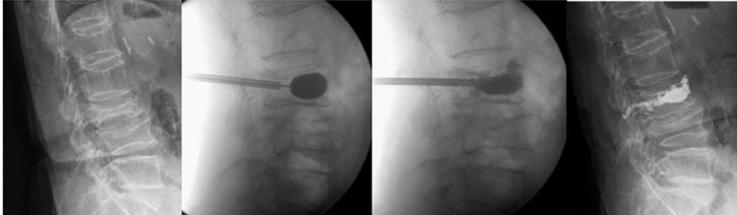
Kyphoplasty is a minimally invasive, image-guided procedure designed to stabilize vertebral fractures, relieve pain, and partially restore vertebral height.
What Is It?
Kyphoplasty is a minimally invasive, image-guided procedure designed to stabilize vertebral fractures, relieve pain, and partially restore vertebral height.
It involves the insertion of a balloon within the vertebral body to create a cavity, followed by controlled injection of bone cement (PMMA), allowing better height restoration and reduced cement leakage compared to standard vertebroplasty.
Indications
Osteoporotic vertebral compression fractures
Vertebral metastases and multiple myeloma
Painful vertebral collapse with loss of height
- Pathological fractures with mechanical instability
Role in Interventional Oncology
In oncologic patients, kyphoplasty plays a dual role:
Mechanical stabilization and partial vertebral reconstruction
Adjunct to tumor ablation techniques
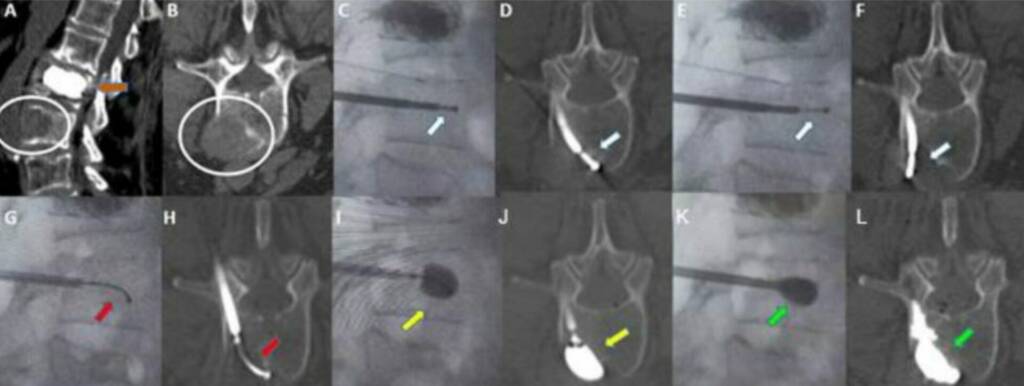
It is frequently combined with ablation (radiofrequency, microwave, cryoablation) to:
- Improve local tumor control
- Create a cavity for safer and more homogeneous cement distribution
- Reduce pain more effectively
- Minimize the risk of further vertebral collapse
Integration with Systemic Therapies and Radiotherapy
Kyphoplasty provides rapid pain relief and structural support, allowing patients to maintain or resume systemic oncologic treatments and complementing radiotherapy, which may have a delayed analgesic effect.
Procedure
The procedure is performed under conscious sedation (local anesthesia combined with intravenous analgesia and mild sedation) or general anesthesia when required.
Percutaneous transpedicular access under CT or fluoroscopic guidance
Balloon inflation within the vertebral body to create a cavity
- Controlled cement injection with real-time imaging
Conscious sedation allows optimal pain control, patient cooperation, and rapid post-procedural recovery.
The procedure typically lasts less than one hour, with a short hospital stay (usually 24 hours).
Benefits
Rapid pain relief
Vertebral stabilization
Partial restoration of vertebral height
- Reduced risk of cement leakage
- Minimally invasive approach
- Fast recovery